Leonardo da Vinci at Château d’Amboise
Leonardo da Vinci spent the last three years of his life in Amboise, from 1516 to his death on May 2, 1519, as guest of François I, and the town holds both ends of the story: the manor of Clos Lucé where he lived and worked, and his tomb in the Saint-Hubert chapel on the ramparts of the royal château, 400 meters apart.

Clos Lucé
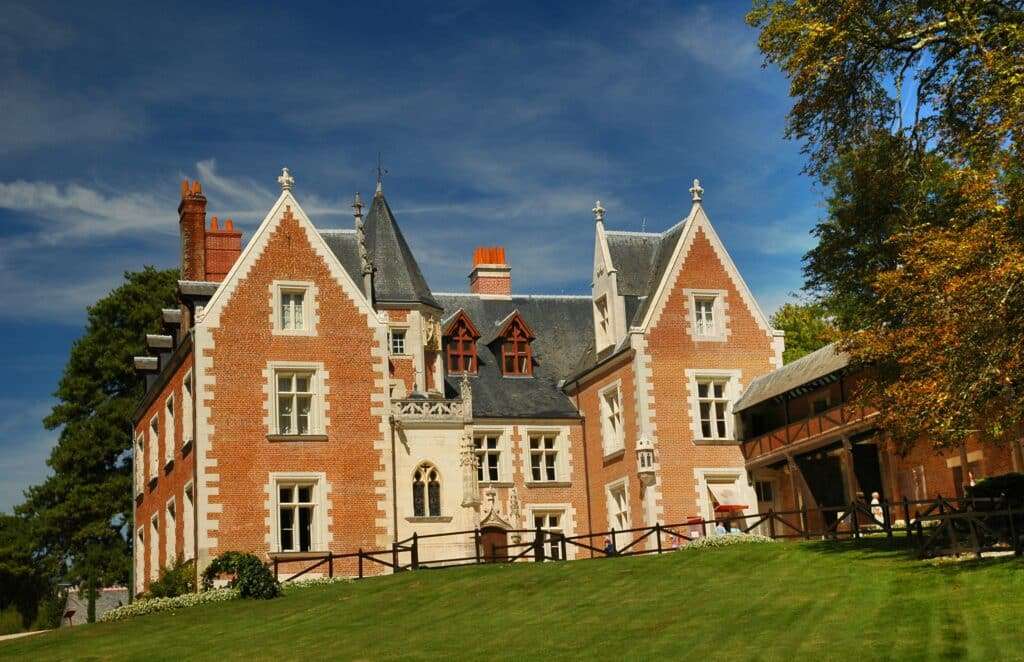
François I installed Leonardo at the brick-and-tufa manor of Clos Lucé with the title of First Painter, Engineer, and Architect of the King and, by the old account, asked only for the pleasure of his conversation. Leonardo arrived from Rome having crossed the Alps by mule with three paintings in his baggage, the Mona Lisa among them, and spent his last years on engineering projects, court festivities, and drawing. The manor shows his bedroom, workshops, and kitchen, with models of his machines built from the notebooks, and the gardens stage full-size versions of his inventions. Current hours and prices are at vinci-closluce.com; allow two hours.
The Tomb in the Chapel
Leonardo died at Clos Lucé on May 2, 1519, at 67, and was buried in the château’s collegiate church of Saint-Florentin. The Revolution wrecked that church, and remains identified as his were transferred in 1874 to the Saint-Hubert chapel, the flamboyant Gothic chapel on the château ramparts, where a floor slab marks the grave. The chapel emerged from full restoration in 2024, and standing at the slab with the Loire below is the quiet high point of an Amboise visit. Our Château d’Amboise page covers the rest of the castle, and Leonardo in the Loire Valley traces his wider mark on the region, Chambord’s staircase included.
Frequently Asked Questions
Where exactly is Leonardo da Vinci buried?
In the Saint-Hubert chapel on the ramparts of the Château d’Amboise, where remains identified as his were moved in 1874 after the Revolution destroyed his original burial church. A floor slab marks the grave.
Did Leonardo bring the Mona Lisa to Amboise?
Yes. He carried it from Italy in 1516 among the paintings in his baggage, and it stayed with him at Clos Lucé until his death, which is how it entered the French royal collection and, eventually, the Louvre.
Can you visit Clos Lucé and the château in one day?
Easily: they sit 400 meters apart. Do the château first for the history and the chapel, then Clos Lucé for the workshops and gardens; together they take a half day.